

Famine Memorials in Ireland and the Power of Remembrance
some places in Ireland are not easy to visit emotionally.
But they are important.
Irish Famine memorials help travellers remember one of the most devastating periods in Irish history. They are places of grief, reflection and respect. They remind us that the Great Famine was not only a national event, but a human tragedy that affected families, villages, communities and generations.
For travellers with The Celtic Way, visiting or learning about Famine memorials can deepen the experience of Ireland. These memorials ask visitors to pause and remember the people behind the history.
The Famine Memorial in Dublin
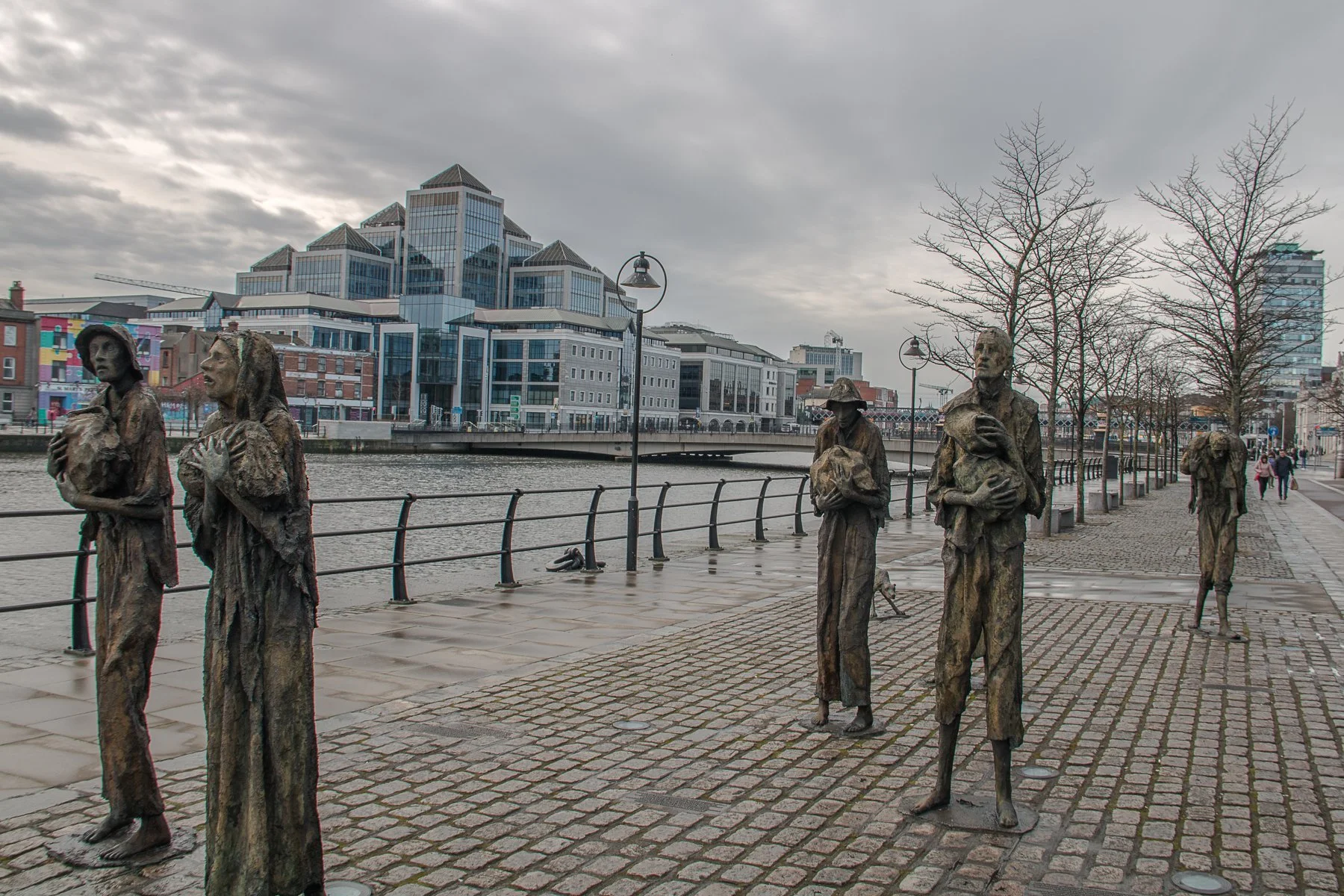
One of Ireland’s most recognisable Famine memorials stands on Custom House Quay in Dublin Docklands. Visit Dublin describes the figures there as “haunting” and says they commemorate the most profound disaster in Irish history.
The location is significant. The figures stand near the River Liffey and the Docklands, connecting memory of famine with the memory of emigration. For many people, famine and migration are inseparable. Hunger, poverty and loss pushed families toward departure, and many left Ireland through ports and quays.
A memorial like this turns history into something visible. It does not explain everything, but it creates a space for feeling, reflection and remembrance.
Why Famine Memorials Matter on a Heritage Journey
Famine memorials are not tourist attractions in the usual sense. They are places of witness. They remind travellers that Ireland’s beautiful landscapes also hold difficult histories.
For descendants of Irish emigrants, famine memory can feel especially personal. Even when a family story does not name the Famine directly, migration, silence or hardship may still be connected to that wider history.
At The Celtic Way, we believe meaningful heritage travel must make space for both beauty and truth. Ireland’s story includes music, hospitality, faith and landscape, but it also includes hunger, loss, displacement and survival.
Famine memorials help us remember with care. They remind us that Irish resilience was not abstract. It belonged to real people who endured, left, stayed, mourned and rebuilt.
Explore meaningful Irish heritage journeys with The Celtic Way:
https://www.thecelticway.com.au/