

Following St Brigid Through Ireland’s Sacred Heritage
St Brigid is one of Ireland’s most beloved figures.
Her story connects faith, women’s leadership, healing, creativity, hospitality and the arrival of spring. Each year, St Brigid’s Day is celebrated on 1 February, closely connected with Imbolc, the ancient festival marking the beginning of spring. Tourism Ireland describes St Brigid’s Day as a time when ancient Celtic rituals and Christian traditions meet modern festival culture.
For travellers with The Celtic Way, St Brigid offers a beautiful way to experience Ireland’s sacred and cultural heritage.
A Saint Connected to Place
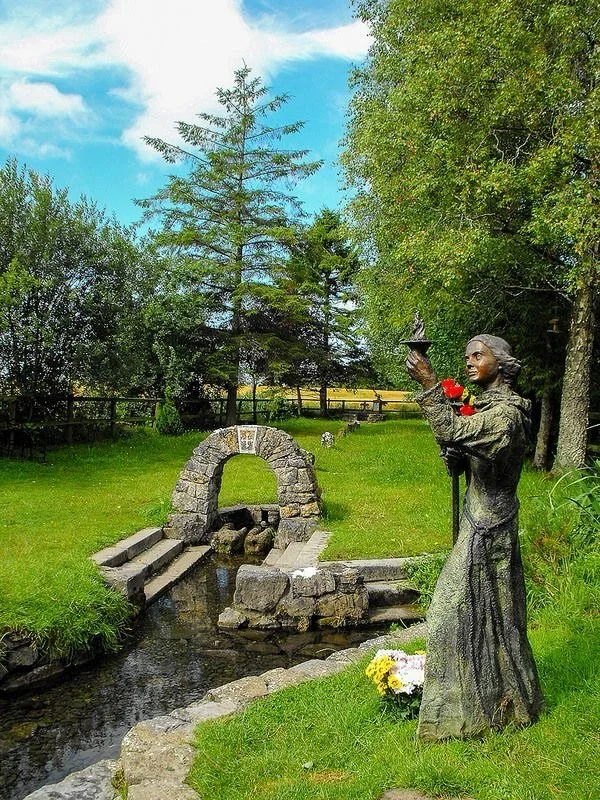
St Brigid is strongly associated with Kildare, where her legacy is remembered through sacred sites, traditions and local devotion. Her story also connects to holy wells, crosses, flame traditions, hospitality and care.
A journey connected to St Brigid can include churches, wells, heritage centres, pilgrimage paths and seasonal celebrations. It can also encourage travellers to look more closely at women’s roles in Irish history — not only queens or rebels, but spiritual leaders, healers, teachers, craft workers, mothers and memory keepers.
Imbolc, Spring and Renewal
One reason St Brigid’s heritage remains powerful is its connection to renewal. St Brigid’s Day and Imbolc mark the first signs of spring, light and new life. Visit Trinity notes that St Brigid’s Day is celebrated on 1 February and marks Imbolc, a festival welcoming spring and the return of light.
This gives the story emotional meaning for travellers. It is not only about the past. It is about hope, resilience and continuity.
At The Celtic Way, we believe meaningful travel should help visitors experience Ireland through both landscape and spirit. St Brigid’s story brings together faith, women’s heritage, local tradition and seasonal memory.
To follow St Brigid is to discover a softer but powerful side of Ireland’s sacred story.
Explore meaningful Irish heritage journeys with The Celtic Way:
https://www.thecelticway.com.au/