Traditional Irish Clothing and the Stories Woven Into Heritage
When travellers think of Irish heritage, they often imagine castles, green landscapes, music, villages and ancient sites.
But Irish heritage can also be found in something much more personal: clothing.
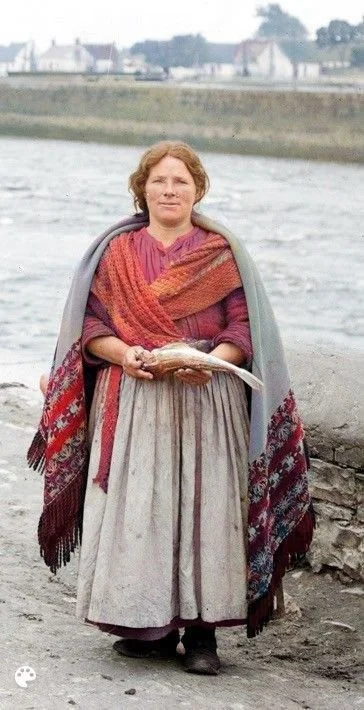
Traditional Irish clothing tells stories about weather, work, class, faith, family, craft and everyday life. The National Museum of Ireland notes that there was no single national traditional Irish costume. Instead, rural Irish families usually wore practical clothing made from hard-wearing materials such as wool and linen, often keeping separate clothes for daily work and “Sunday best.”
For travellers with The Celtic Way, clothing offers a beautiful way to understand Irish people not only through the places they lived, but through what they wore, made and carried through generations.
Clothing for Work, Weather and Daily Life
In rural Ireland, clothing had to be practical. People needed garments that could cope with rain, cold weather, farm labour, fishing, walking and domestic work. Common clothing included woollen coats, linen shirts, wool skirts, aprons, shawls, waistcoats, flat caps, báinín jackets, and strong everyday boots.
These were not “costumes.” They were working clothes.
A shawl could keep a woman warm while walking to market or Mass. A linen shirt could be worn under heavier garments. A flat cap became strongly associated with rural men and working life. A waistcoat or wool coat could be part of both daily and better dress, depending on the family’s means.
Aran Knitwear and Island Craft
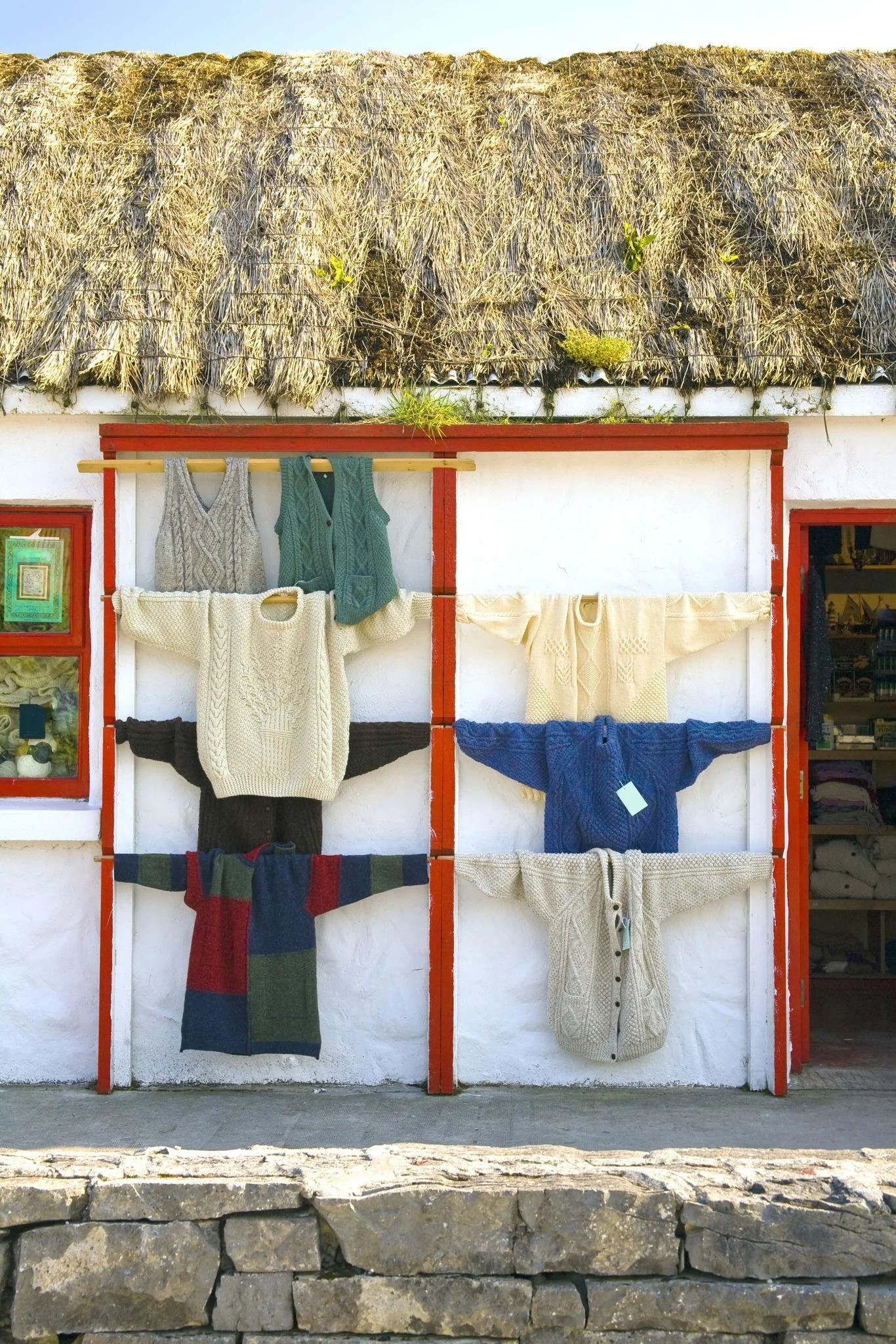
One of Ireland’s most recognised garments is the Aran jumper, also called the Aran sweater. This wool knitwear is closely connected with the Aran Islands off Ireland’s west coast. The National Museum of Ireland holds a red Aran cardigan knitted in 1937, showing stitches such as blackberry, diamond, and sheaf of wheat, and highlighting the skill of Aran Islands knitters.
Aran knitwear is now internationally known, but it began in a world of island life, handcraft, weather and community.
Irish Linen and Donegal Tweed
Two other important textile traditions are Irish linen and Donegal tweed.
Irish linen is connected with flax, weaving and skilled textile production. Lisburn Museum explains that the Irish linen industry, as it is known today, developed from the late seventeenth century, with Huguenot influence playing an important role around Lisburn.
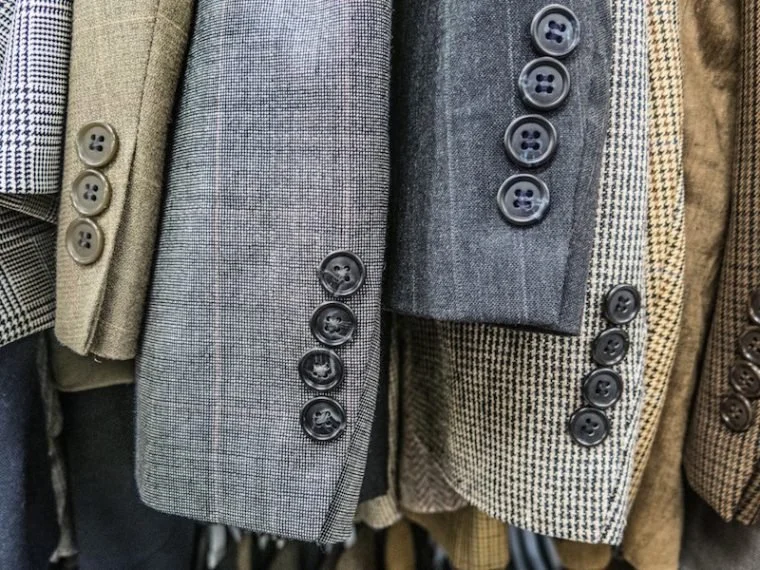
Donegal tweed is strongly associated with County Donegal and the rugged north-west. Its textured wool fabric reflects rural craft, local landscape and practical clothing suited to Irish weather.
Why Clothing Matters on a Heritage Journey
Traditional Irish clothing helps travellers see the human side of heritage. An Aran jumper, Irish linen shirt, Donegal tweed jacket, wool shawl, or flat cap can tell us about work, identity, weather, creativity and family memory.
At The Celtic Way, we believe meaningful travel is about noticing these details. Ireland’s heritage is not only found in stone buildings and landscapes. It is also woven into the clothes people wore, made and remembered.
Explore meaningful Irish heritage journeys with The Celtic Way:
https://www.thecelticway.com.au/