

Understanding Ireland Through Its Famine Heritage Sites
For many travellers, Ireland is known for its green landscapes, music, villages, and warm hospitality. But to understand Ireland more deeply, it is also important to understand the difficult histories that shaped its people.
One of the most significant events in Irish history is the Great Famine, also known as the Irish Potato Famine. It was a period of hunger, loss, disease, and mass emigration that changed Ireland forever. For many families across the Irish diaspora, especially in countries such as Australia, America, Canada, and Britain, the Famine is not only national history. It is part of family memory.
This is why Famine heritage sites are important stops for travellers who want a more meaningful experience of Ireland.
Visiting Places of Memory
Across Ireland, there are museums, memorials, workhouse sites, famine roads, abandoned villages, and local history centres that help visitors understand the human impact of the Famine. These places are not always easy to visit emotionally, but they offer a deeper understanding of Irish resilience.
A Famine memorial, for example, is not simply a monument. It represents families who suffered, communities that were broken apart, and people who were forced to make impossible choices. A former workhouse tells a story of poverty and survival. An abandoned village can show how deeply the crisis affected rural Ireland.
For travellers, visiting these places can change the way they see the Irish landscape. A quiet field, a stone ruin, or a country road may suddenly feel connected to a much larger story.
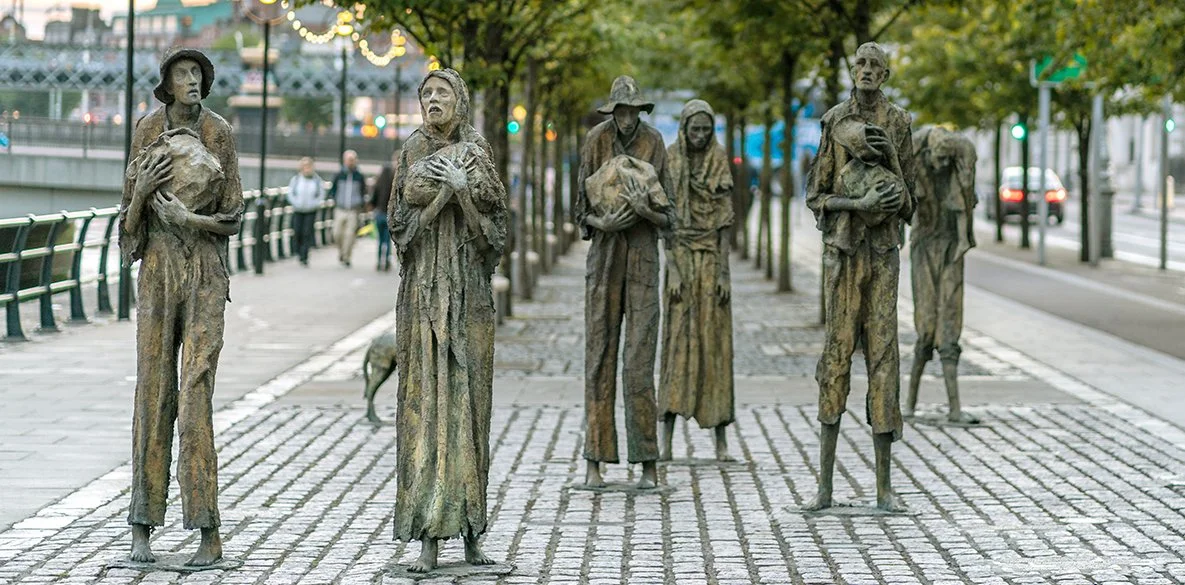
Irish Famine Memorial, Custom House Quay Dublin
Why Famine History Matters on a Heritage Tour
A heritage tour is different from a regular sightseeing trip because it does not only ask, “What can we see?” It also asks, “What happened here, and why does it still matter?”
The Great Famine shaped Irish migration, family structures, land ownership, language, religion, and cultural memory. It also shaped the Irish presence overseas. Many people who left Ireland during or after the Famine carried their stories, pain, faith, and traditions into new countries.
For travellers with Irish ancestry, learning about the Famine can help explain why their families left Ireland and why certain stories may have been passed down quietly through generations.
A Deeper Way to Experience Ireland
At The Celtic Way, we believe that meaningful travel includes both beauty and truth. Ireland’s landscapes are stunning, but they are also layered with history. To travel through Ireland with care is to honour not only the famous landmarks, but also the ordinary people whose lives shaped the country.
Famine heritage sites remind us of hardship, but also of endurance. They show how Irish communities survived, adapted, migrated, and carried their identity across the world.
For travellers seeking a deeper connection to Ireland, these places offer more than history. They offer reflection, empathy, and remembrance.
Explore meaningful Irish heritage journeys with The Celtic Way:
https://www.thecelticway.com.au/