

Croagh Patrick and Ireland’s Sacred Mountain Journeys
Some places in Ireland are powerful because of what you see.
Others are powerful because of what people have carried there for centuries: prayer, hope, hardship and devotion.
Croagh Patrick, in County Mayo, is one of Ireland’s most famous sacred mountains. Rising above Clew Bay, it is closely associated with St Patrick and remains an important pilgrimage site today. Tourism Ireland notes that St Patrick is said to have fasted for forty days on the mountain in the fifth century, and that the mountain has drawn pilgrims ever since.
For travellers with The Celtic Way, Croagh Patrick offers a meaningful connection between landscape, faith and Irish heritage. It is not only a mountain walk. It is a journey into Ireland’s spiritual memory.
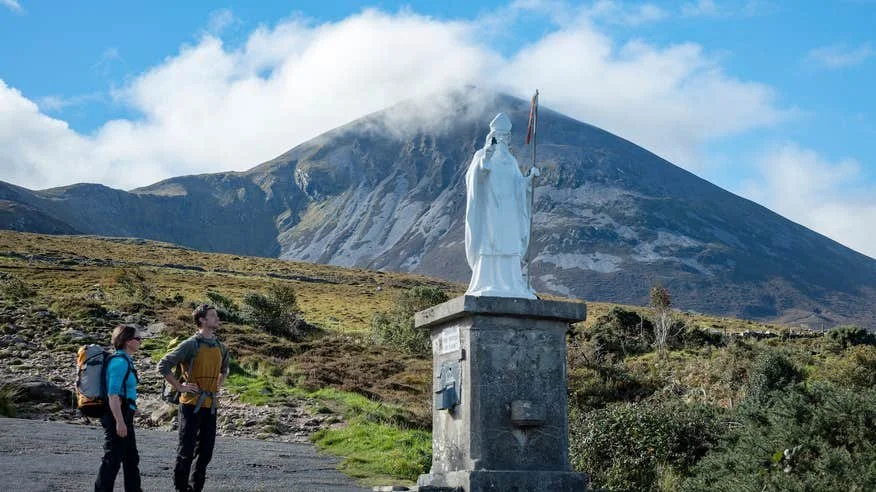
A Pilgrimage Landscape
The climb up Croagh Patrick can be physically demanding, but that is part of its meaning. Pilgrimage has often involved effort, reflection and endurance. Tourism Ireland says the climb up and back usually takes around three to four hours and highlights the views over Clew Bay as part of the experience.
The mountain is also marked by living tradition. A guide to Croagh Patrick notes that traditional pilgrimage days include Garland Friday, Reek Sunday, the last Sunday in July, and 15 August, although pilgrims now climb throughout the year. These dates show how sacred travel remains part of Irish life, not only Irish history.
Why Croagh Patrick Matters on a Heritage Tour
Croagh Patrick connects many themes that matter to heritage travellers: faith, landscape, endurance, local tradition and personal reflection. It also sits within the wider heritage of County Mayo, close to Westport, Clew Bay and other places linked to Irish history and family memory.
At The Celtic Way, we believe meaningful travel should allow visitors to experience Ireland with both heart and mind. Croagh Patrick invites travellers to slow down, look outward across the landscape and inward toward personal meaning.
It is a sacred mountain, but also a reminder that Irish heritage is often walked, climbed, prayed and remembered.
Explore meaningful Irish heritage journeys with The Celtic Way:
https://www.thecelticway.com.au/